
June 2026


A Chartered Accountant called me a few days ago.He was starting a CA exam coaching business and wanted a simple website.

Then he added, “Let’s integrate a payment gateway so students can pay online.”

Sounds logical, right? But here’s what I told him : “You’re new. No one is paying you online without trust.”

Early-stage businesses copy what funded startups do: Online payments, Automated flows, Full digital journeys. But that doesn’t work at that phase.


“More features = better product.” That assumption quietly kills most SaaS ideas.

Worked with a non-tech founder who had a long roadmap from day one : dashboards, reports, integrations.

But no users yet. He was asking me to build for scale… without knowing if the core problem even mattered.

I pushed back. I said “Let’s solve one problem. Properly.” Not 10 features. Just one that people actually use.

You’re not losing leads because of marketing. You’re losing them because you forgot when to reach out.

I spoke to a corporate gifting business. They had a potential to get leads automatically from their existing clients on same month every year

But they wait for clients to come back.Most don’t.Because no one follows up at the right time.

I suggested them an idea to build a CRM. It remembers events of the customer and auto generate leads 3 weeks before the event.

Both of them AI frameworks built in PHP. Both have everything — agents, RAG, chat, MCP. You can compare them to LangChain and LangGraph.

But one difference stood out fast.

Neuron AI → easy to follow

Symfony AI → harder to understand

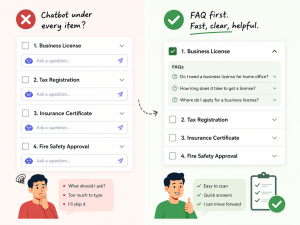
Adding a chatbot will make Product smarter. That’s what a prospect told me while discussing a checklist product.

His idea: Every item in the checklist should have a chatbot under it… so users can ask for clarification.

Sounds advanced. Sounds impressive. But there was a problem. This wasn’t an internal tool. It was meant for end customers.

These people want to complete a checklist faster and move on. So I said “don’t start with a chatbot.”

But , It usually isn’t a smart move.

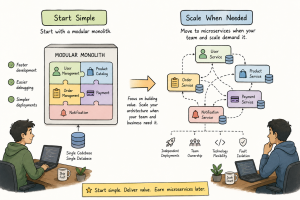
Spoke to a team — 3 developers, 6 microservices.

Everything was “scalable”… except their speed.

  • Simple changes touched multiple services
  • Debugging meant jumping across repos
  • Deployments became coordination work

So I told them: Microservices don’t solve scale of traffic.