
Insights

Being a technology consultant and SaaS Founder, I get to speak with lot of people. I impart most valuable knowledge from them. I share those learnings here.


How many mobile app did you install last month ? For most people it’s zero. So what makes you to think that your new brand’s app get installed by your customers ?

At the start, your idea is still maturing. You would be doing lot of updated and bug fix every day.

Mobile app store approval become a barrier. You cannot push the changes instantly. It will slow down your development and time to market.

Best approach is to build PWA = Progressive Web App. In most case, that’s more than enough.

If you’re a non-tech founder outsourcing your product development, pay close attention to this 👇

Your app may look perfect during testing. Clean UI. Smooth flow. Everything feels “done.” You release payment, feeling confident.

Then production hits.

Users from different countries start using your app… and suddenly things break in subtle, frustrating ways:

Last week, I was discussing a loyalty system with a prospective client.

Their idea was straightforward: “Let’s set an expiry date. On that day, points go to zero.”

I didn’t agree. I suggested a different approach based on loss aversion.

Instead of wiping points completely:

I’ve seen this mistake in multiple products.

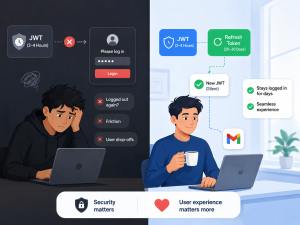
User clicks “Resend OTP”… System generates a new code every time. Sounds correct, right?

But here’s what actually happens:

  • SMS gets delayed
  • User clicks resend
  • New OTP is generated
  • Old OTP arrives first
  • User enters it and get “Invalid OTP” error

From the user’s perspective, your system is broken.

While building a matrimonial platform recently, we hit a small but important decision: How should we capture height? Feet or centimetres?

Client’s suggestion was to give both options and let users choose. That’s a complex UI – I said

I proposed something different.

  • Let’s Capture it in centimetres (global standard)
  • And show instant conversion to feet beside the input.

Why? Because the product wasn’t just for India. It was meant for cross-border matchmaking.

Recently, someone tried building an education platform using AI.

At first, it looked impressive. Features were coming in fast. Progress felt great.

But after a month, things changed. Every new update introduced more bugs than features.

The code started conflicting with itself. Lot of repeated codes. Timelines slipped. Control was lost.

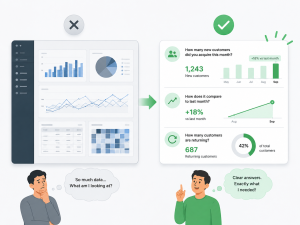
Most business apps follow the same pattern: Add. Update. Delete. List.

And then comes the “list” screen with a data grid…which is often too basic to be useful.

No proper filtering, Limited sorting, Barely any control over data.

So what do users do? They export to Excel. If excel sheet make their workflow better then why should your product exist.

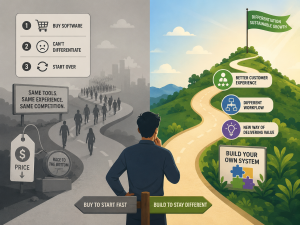
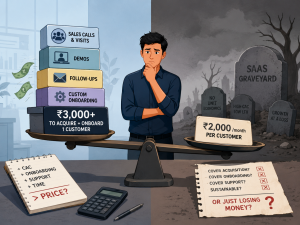
A friend told me he found a service offering website development for ₹500/month.

Sounds like a great deal, right? I told him not to go for it. Because here’s what usually happens with these models:

  • Same template reused for dozens of clients
  • Built by interns or fully AI-generated with minimal thought
  • Slow performance and poor structure
  • Weak or delayed support once they scale clients

And the real cost shows up later:

  • Low conversion from ads become of poor user experience
  • Eventually rebuilding the entire website

I said “ You don’t save money.You just delay the expense.” He took the advice.

AWS-Credits

I see many early-stage non tech founders jumping straight to AWS or GCP.

Mostly because of “free credits.” Honestly, that’s a trap.

At that stage, you don’t have a scaling problem. You have a customer acquisition problem. A simple VPS is more than enough:

  • It’s cheaper
  • Easier to manage
  • No unnecessary complexity

But cloud platforms make you think like you’re building for millions…when you don’t even have your first 100 users.

restaurant POS

A year ago, someone bought a restaurant POS from CodeCanyon.

They came to me for one key addition: reports. Sounds simple.Until I looked at the code.

The UI looked premium…But the data layer was a mess.

  • No proper structure
  • Missing critical fields like created date
  • No consistency in how data was stored

And that’s when it became clear: Building proper reports would cost more than what they paid for the entire software.