May 2026


That’s what I told a founder who came to me with an AI-generated website.

He wanted 5–6 small issues fixed. But the real problem wasn’t the issues.

The site had no branding, no structure, and didn’t even work well on mobile. Fixing it wouldn’t change anything for his business. I explained the same to him

That’s when he paused… and decided to rebuild everything.

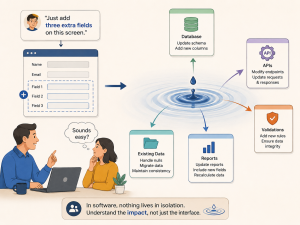
A client once asked for a small update: “Just add three extra fields on this screen.”

Sounds easy. But that one change meant:

  • Updating database structure
  • Modifying APIs
  • Adjusting validations
  • Changing reports
  • Handling existing data

What looked like a 10-minute UI tweak turned into a full system-wide update. And this happens all the time.

Because in software, nothing lives in isolation.Every small change has ripple effects. The problem isn’t the request. It’s the assumption that it’s “simple.”

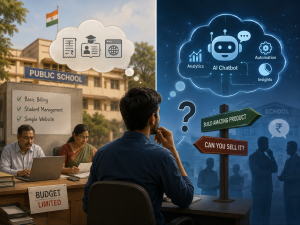
Six months ago, a client was ready to pay me ₹1 lakh to start building an education portal.

I told him to pause. Because the core of his product depended on a third-party provider.

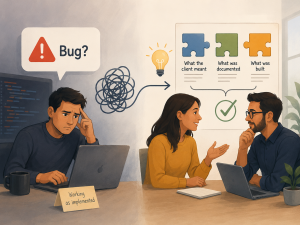
Instead of starting development, I asked him to sit with me and document everything:

  • What he expects
  • What the third-party actually provides
  • What’s missing

The gap was huge.There were critical pieces the third-party didn’t support yet.

A few months ago, many companies rushed to replace developers with AI.

It looked promising.Faster output. Lower cost. Less dependency. But reality kicked in. AI-generated code started:

  • Breaking existing features
  • Lacking consistency
  • Creating more maintenance overhead

And slowly, silently… companies started hiring developers back into the same roles.

Here’s the truth: AI can help you accelerate development.But it cannot take full ownership of a production system.